Cat.6 and Cat.6a are currently mainstream high-performance network cables, often a difficult choice for users. While they look similar, they differ significantly in bandwidth, speed, and applicable scenarios. Choosing the right cable type is crucial, especially in professional network environments such as servers. This article will clearly compare the core differences between Cat.6 and Cat.6a to help users make more practical cabling decisions.
Cat.6 and Cat.6a are currently mainstream high-performance network cables, often a difficult choice for users. While they look similar, they differ significantly in bandwidth, speed, and applicable scenarios. Choosing the right cable type is crucial, especially in professional network environments such as servers. This article will clearly compare the core differences between Cat.6 and Cat.6a to help users make more practical cabling decisions.
The difference between Cat.6 and Cat.6a
|
Cat.6 |
Cat.6a |
| Speed |
10/100/1000 Mbit/s |
10/100/1000/10000 Mbit/s |
| Frequency |
250 MHz |
500 MHz |
| max. length |
100m (109,36 yds) |
100m (109,36 yds) |
| picture |
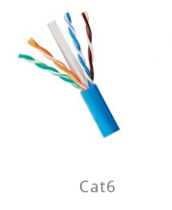 |
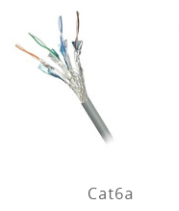 |
Technical difference between Cat.6 and Cat.6a
Different applicable scenarios
Cat.6 cables fully meet the needs of ordinary homes and standard office environments, supporting smooth HD playback and providing reliable network connectivity for daily work and life. They are also backward compatible with Cat.5e cables, offering broad compatibility. Cat.6a cables boast even higher transmission speeds, making them more suitable for professional server rooms, high-demand network cabinets, and other environments requiring stable, high-speed data transmission, making them an ideal choice for future-proof high-end servers and enterprise network configurations.
Procurement Instructions
While Cat.6 and Cat.6a network cables offer numerous advantages, they also have some limitations. For example, transmission speeds typically decrease as the distance between servers, routers, and end devices increases. Therefore, protecting patch cords from external interference such as electromagnetic noise and stray signals is crucial.
When purchasing Cat.6 or Cat.6a cables, pay attention to their conductor material and carefully evaluate their shielding performance. For residential and general applications, 100% pure copper twisted-pair cable is strongly recommended. In addition to UTP cables, FTP patch cords (whose pairs are protected by an additional foil shield) are also becoming increasingly popular in home and light commercial environments.


