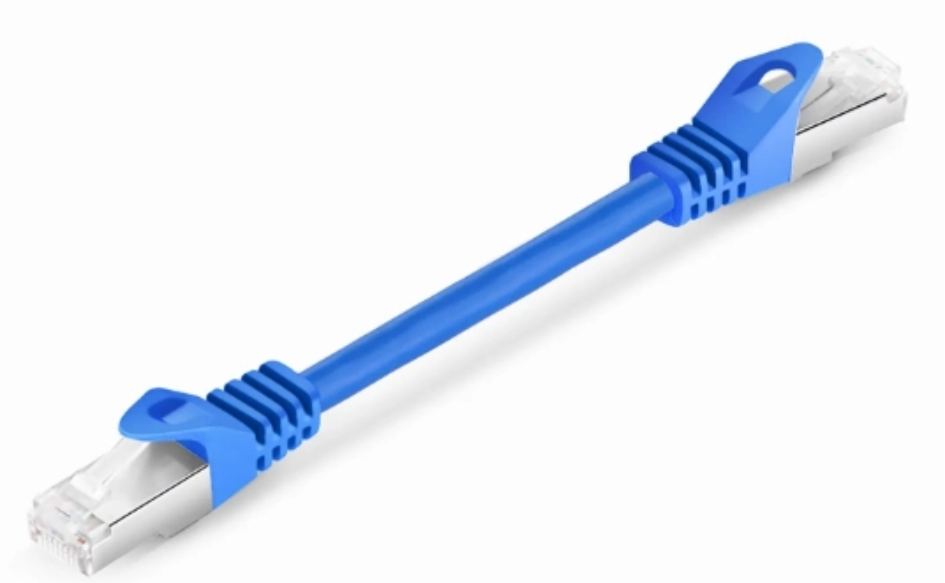
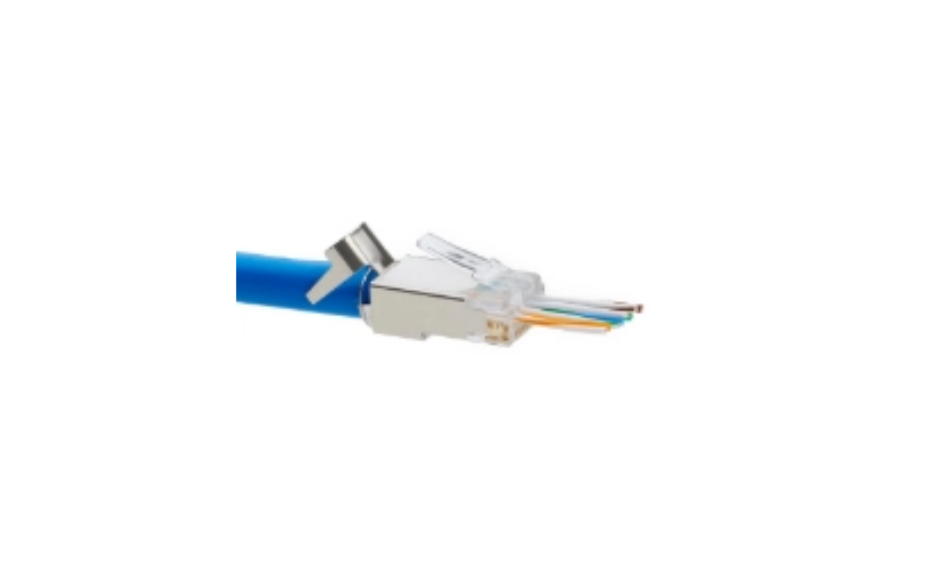
Cat6 twisted-pair Ethernet cable is currently the mainstream universal cabling solution, widely used in commercial buildings, offices, schools, retail stores, and various commercial networks. It supports stable Gigabit Ethernet transmission, has a suitable thickness and good flexibility, simplifies cabling management in cable trays and patch panels, and significantly reduces installation difficulty and subsequent maintenance costs.
Cat6 combines stable performance, affordability, strong compatibility, and flexible installation, making it the preferred choice for network cabling for small and medium-sized enterprises with regular network needs and clear budget controls.
Cat8 Ethernet cable is a professional, high-frequency, high-bandwidth copper cable designed for ultra-high-speed transmission scenarios. It features enhanced full shielding, complies with 25GBASE-T and 40GBASE-T high-speed transmission standards, effectively eliminating electromagnetic interference and crosstalk, and ensuring ultra-stable signal integrity during high-frequency data transmission. However, its specialized shielding structure makes Cat8 cables thicker, heavier, and less flexible than Cat6 cables, strictly limiting their effective transmission distance to within 30 meters.
Therefore, Cat8 cables are only suitable for internal cabling in server rooms, handling high-performance data transmission, rather than general office cabling.
For conventional office floors, daily office equipment networking, and general commercial network deployment, Cat6 delivers stable performance, low installation cost, strong compatibility, and long service life. It fully meets the 1G-10G network demands of most enterprises and is the most cost-effective choice for large-area horizontal cabling.
Deploy Cat8 cables only when short-distance 25G/40G ultra-high-speed transmission is required for server rooms, data centers, and high-end equipment racks. Using Cat8 for conventional office desks will not bring performance improvement but will unnecessarily increase procurement costs, wiring space occupancy, and construction difficulty.