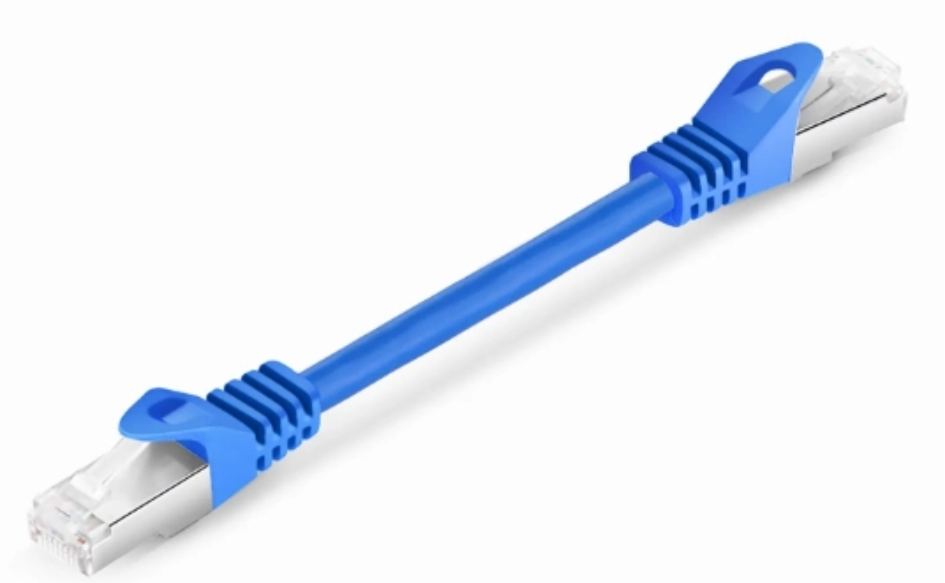
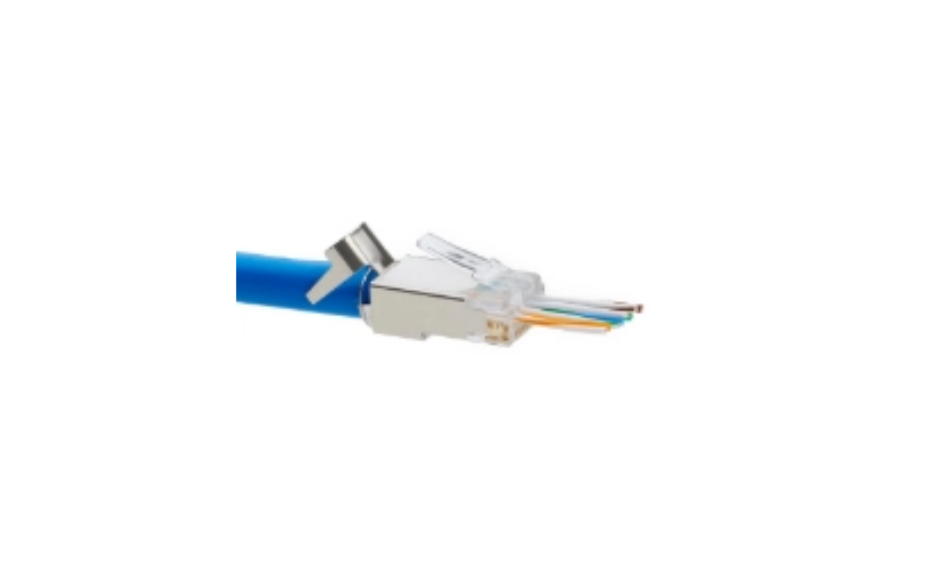
Cat6 was originally designed for Gigabit Ethernet (1000BASE-T), with a fixed bandwidth limit of 250MHz. Therefore, under ideal laboratory conditions, it can only stably transmit speeds of 10Gbps over short distances. However, in real-world, densely cabled environments, Cat6 suffers from severe signal attenuation and crosstalk due to factors such as cable bundling, heat generation, and electromagnetic interference, making it unable to meet the demands of continuously evolving digital infrastructure for high-speed transmission.
The most direct improvement is performance:
Cat6: typically supports 1Gbps
Cat6A: supports 10Gbps over 100 meters
Bandwidth: doubled from 250 MHz to 500 MHz
This is not just a number increase. At higher frequencies, signal stability becomes much harder to maintain, and Cat6A is engineered specifically to solve this problem.
At first glance, Cat6 and Cat6A look similar, but internally they are quite different.
Both use a cross separator to maintain pair spacing and reduce crosstalk. However, Cat6A structures are more refined, often using optimized or reinforced separators to maintain tighter geometry control.
This improvement significantly reduces alien crosstalk in high-density installations—one of the main reasons Cat6 struggles in real 10G environments.
Cat6A typically features:
Larger conductor size
More precise twist rate control per pair
Better electromagnetic balance across all four pairs
These improvements require stricter manufacturing control, including wire drawing precision and real-time production monitoring—critical for stable large-scale deployment.
As frequency increases, alien crosstalk becomes a key challenge.
Compared with Cat6, Cat6A has much stricter requirements for interference control. Common Cat6A constructions include U/UTP and F/UTP. We offer UTP, S/FTP, U/FTP, F/FTP, depending on application needs.
Shielding is not “the more, the better.” A well-designed Cat6A solution balances:
Installation environment
Grounding conditions
Cost efficiency
Interference levels
The goal is system stability, not just heavier shielding.
The upgrade from Cat6 to Cat6A is not merely a specification update, but an inevitable industry trend for scalable, future-proof network infrastructure amid surging global data volume. If you need customized Cat6A cabling quotation or project technical consultation, welcome to contact our sales team anytime.