With the rapid development of cross-border e-commerce today, global circulation of communication equipment faces a key challenge: fragmentation of interfaces and protocols.
Background
With the rapid development of cross-border e-commerce today, global circulation of communication equipment faces a key challenge: fragmentation of interfaces and protocols. In the past, due to the lack of uniformity in AISG (Antenna Interface Standards Group) standards, antenna equipment from different manufacturers led to high installation and maintenance costs, and in some cases, even failed to
Dilemmas Before Standardization
- Chaotic Interfaces: Before 2010, there were more than ten specifications for antenna connectors, including DB9, RJ45, aviation plugs, etc. For example, the AISG aviation plugs of Shenzhen Tuyi Optoelectronics once required customization to be adapted to equipment from different manufacturers.
- Fragmented Communication Protocols: Proprietary protocols of manufacturers led to the failure of remote control. For instance, a certain European operator needed to configure three types of controllers for the same base station, causing the operation and maintenance costs to soar by 40%.
AISG's Solution
AISG achieved three major upgrades by formulating unified physical interfaces (such as DB9, M12) and communication protocols (AISG 3.0):
- Enhanced Compatibility:It supports interoperability of equipment from multiple manufacturers. For example, Huawei's Massive MIMO antennas can be directly connected to Ericsson base stations.
- Intelligent Remote Control:Through the RS-485 protocol, it enables cloud - based adjustment of antenna tilt angles and gains, increasing operation and maintenance efficiency by 60%.
- Cost Optimization: Standardized cable components (such as IP68 waterproof cables) reduce inventory pressure. The customized solutions of Shenzhen Tuyi Optoelectronics save customers 30% of procurement costs.
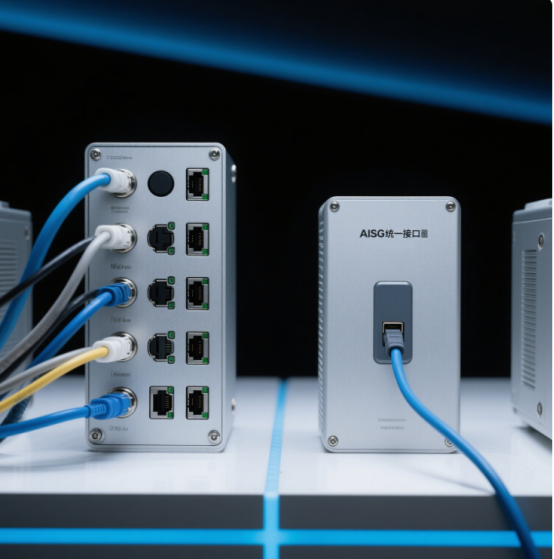
Figure 1 Comparison between AISG Interface and Traditional Interface
Industry Application Cases
- 5G Base Stations:The AISG protocol enables Massive MIMO antennas to support dynamic beamforming, increasing coverage efficiency by 35%.
- Tower Sharing:When multiple operators share antennas, AISG realizes "one interface for multiple systems", shortening the troubleshooting time by 70%.
Future Outlook
With the popularization of 6G high - frequency band (terahertz) equipment, AISG is promoting the technology of multiplexing optical fibers and control signals, further simplifying the deployment process.


